CHANI: Your Astrology Guide
- 4.9
- Rating
- 100.00K
- Installs
- Free
- Price

 Analysis by App-foxy
I found CHANI most useful when I treated it as a guided astrology journal rather than a quick horoscope dispenser. The app sits in the lifestyle category and comes from Chani Nicholas Inc, with a calm, personal approach that makes it easy to return to your chart and reflect on what you are reading. I would recommend it to someone who wants astrology to become part of a daily routine, especially if they prefer explanations and reflection prompts over a stream of short, interchangeable predictions.
That said, the first experience can be less effortless than the polished presentation suggests. Astrology apps depend heavily on the information entered during setup, and a small mistake in birth details can change the chart you see. Some people may also expect everything to be immediately available because the app is free to download. In practice, the free starting point and the paid material feel like separate parts of the experience, so it helps to understand that distinction before committing to regular use.
Getting started without creating avoidable confusion
Before judging the readings, I’d make setup a careful two-minute task rather than something to rush through: check the birth date and location, and think about how certain you are of the birth time. I’d also keep a brief note of what feels useful as I explore, so I can tell whether the app’s reflective style suits me instead of relying on a first impression.
You May Also Like

 Pandora - Music & Podcasts
Pandora’s Music Is Easy to Start, but Harder to Recover
Pandora’s strength is its low-effort path from a seed to a station. Its weak spot is how much confidence it asks you to place in connection, setup, and quiet recovery.

 8 Ball Pool
 Is Built on Rivalries, Rematches, and Routine
A close look at the rivalries, rematches, shared routines, and unanswered safety questions that turn a quick pool match into a persistent mobile community.

 Samsung Music
’s Quiet Strength Is Playing What You Already Own
Its reach comes less from spectacle than from dependable access to a personal library. That simplicity is both the app’s strongest retention engine and its ceiling.

 AccuWeather: Weather Radar
AccuWeather Review: A Quick, Clear Forecast for Everyday Decisions
For everyday plans, the best forecast is the one you can understand quickly. AccuWeather makes rain timing, radar, and local conditions easy to act on, with a few trade-offs.

 Hill Climb Racing
Why Hill Climb Racing Still Turns Crashes Into One More Run
A tiny car, a bumpy hill and one more upgrade: Hill Climb Racing keeps resurfacing because its simple chaos makes every near-miss feel personal.

 AliExpress - Shopping App
AliExpress Makes Global Shopping Feel Personal, but Shoppers Bear the Risk
AliExpress turns a global marketplace into a pocket-sized discovery engine. Its reach is useful, its shopping loop compelling, and its trade-offs easy to miss.
More From Our News Desk
View All News


Where the first real friction appears
The main setup hurdle is not learning the interface; it is supplying accurate personal information. A birth chart is sensitive to details such as date, location, and time, so I would not rush through the opening screens just to reach the main content. If you are unsure about your birth time, pause and decide whether you want to use an approximate time or continue with less confidence in the chart’s most time-sensitive elements. Guessing casually can make later interpretations feel oddly specific or inconsistent.
I also recommend checking the location carefully rather than choosing the first similarly named place in a search result. Towns can share names, and a nearby location may not produce the same chart calculations. This is one of those small details that is easy to overlook because the app does not feel technical, yet it has a direct effect on how relevant the readings seem.
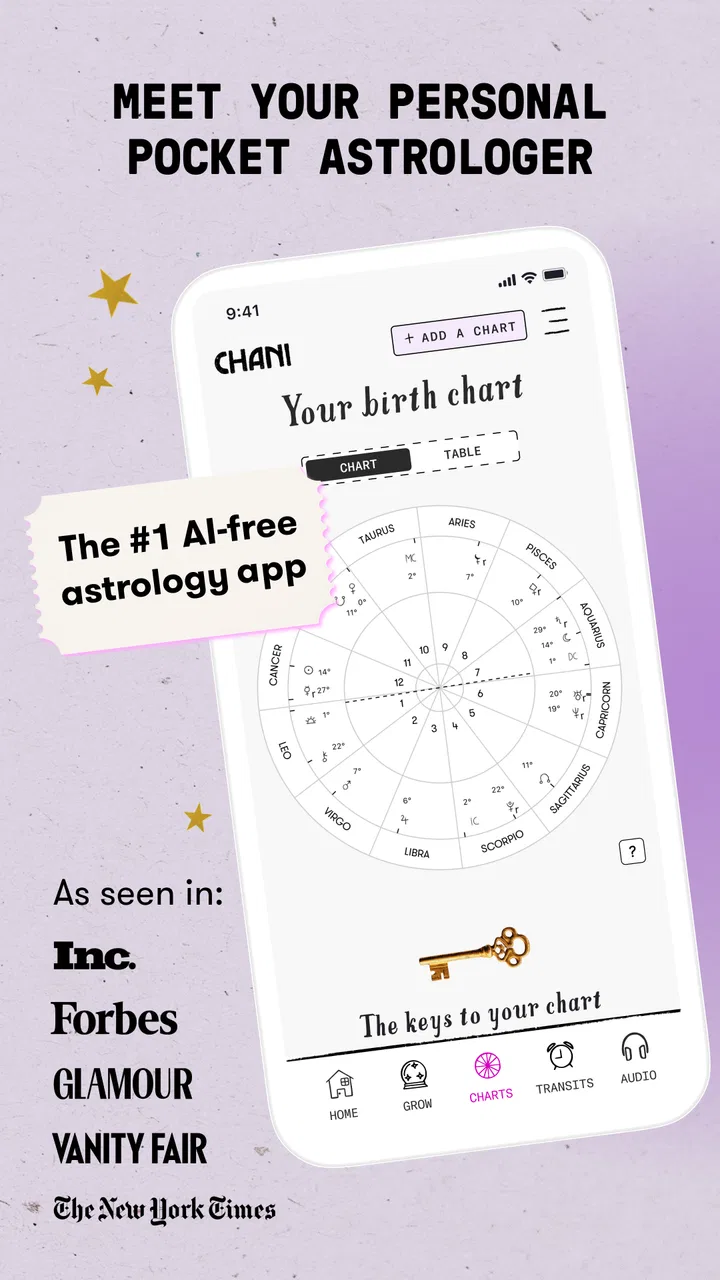
Another common sticking point is expectation management. The app presents itself as astrology created by real astrologers rather than by AI, and that distinction matters to its tone. The writing feels more considered than the generic sentences I often see in automated horoscope tools, but it also asks you to spend time with the material. If you want a one-line answer before leaving for work, CHANI may feel slower than expected.
Setup checks worth doing before you judge the readings
Before deciding that a reading does not fit, I would go back through the personal details and make sure they match your records. This is especially important if you entered the information quickly on a phone. Review the selected place, confirm the date, and consider whether the birth time is exact, approximate, or unknown. That simple check is more useful than immediately reinstalling the app or assuming the interpretation is broken.
It is also worth checking whether you are looking at a personal chart interpretation, a current guidance section, or a longer piece of educational content. These serve different purposes. A chart explanation may describe a lasting pattern, while a daily or current reading is more likely to speak to the mood of a particular period. Mixing those categories can make the app appear contradictory when it is actually offering different layers of context.
On an iPhone or iPad running at least iOS 9, the application is designed for a broad audience and carries an Everyone age rating. That makes it approachable for curious newcomers, but an accessible age rating should not be mistaken for a guarantee that every interpretation will feel simple. Astrology vocabulary still takes time to learn, particularly when several placements or themes appear together.
The current version is 2.9.0, so if a screen behaves strangely, I would first make sure the installed copy is current through the normal app-update process. I would also close and reopen the app before assuming that a page or reading has disappeared permanently. Those are ordinary checks, but they prevent a temporary loading issue from becoming an unfair judgment about the content itself.
How I recovered when a reading felt wrong
My most useful recovery method was to slow down and separate a technical concern from a disagreement with the interpretation. If a page loads incompletely, I would leave it, reopen it, and try again on a stable connection. If the page loads normally but the wording feels unrelated to my situation, I would revisit the birth information and identify what kind of reading I am viewing. Those two problems can feel identical at first, but they need different responses.
I would also avoid changing several things at once. Re-entering the birth details, reinstalling the app, and switching between sections makes it difficult to know what fixed the problem. A better sequence is to verify the profile, restart the app, and then revisit the same reading. If the issue remains, checking the device’s available storage and operating-system compatibility is a sensible next step without assuming that CHANI itself is at fault.
For people who use the app as a daily practice, saving a personal note outside the app can help. I do not mean copying every reading. I mean recording the date, the theme that stood out, and how it connected with your day. This turns the experience from passive scrolling into a small experiment. After a few weeks, you can see which kinds of guidance are genuinely helpful to you and which ones you tend to ignore.
That workflow also protects against a familiar astrology-app problem: reading too much at once. When several interpretations are available, it is tempting to keep opening pages until one sounds dramatic. I found it more useful to choose one theme, reflect on it, and return later. The app’s strength is its depth and tone, not the speed at which you can consume every available piece of text.
When the app is not actually the cause
Some frustrations come from the nature of astrology rather than from the software. If you want a measurable answer to a practical decision, a chart interpretation is not a substitute for budgeting, medical advice, professional guidance, or a conversation with someone involved. I enjoy astrology as a reflective language, but I would not use any reading as the sole reason to make a major life choice.
It is also possible to dislike a reading because it touches a subject you are not ready to consider. That does not necessarily mean the app has misunderstood you, but it does mean you should keep some distance from the authority of the wording. I prefer using CHANI as a prompt for questions such as “Why did this stand out to me?” rather than treating every sentence as a fixed prediction.
Notifications and routine can create another false impression of failure. If you miss several days, the app may feel less useful simply because you have lost the habit of opening it. I would not try to catch up on everything. Start with the current material, then return to older explanations only when you have a specific question. This keeps the experience manageable and avoids turning a reflective tool into another obligation.
Connection problems can likewise be misleading. If a reading takes time to appear, try the basic checks first: confirm that other apps can connect, switch between a reliable Wi-Fi connection and mobile data if available, and restart the app. If only one section remains affected after those checks, the problem is more likely limited to that content or session than to your entire device. I would avoid repeatedly tapping a button, since that can make a slow screen feel even more unresponsive.
A realistic everyday way to use it
Imagine opening CHANI before work on a crowded Monday. You have ten minutes, not an hour, and you do not want to browse randomly. I would read the current guidance once, choose the sentence or theme that feels most relevant, and write a short note about one action it suggests indirectly: having a difficult conversation more patiently, protecting a quiet block of time, or noticing a recurring emotional reaction. The value is not in predicting the day perfectly; it is in giving you a deliberate pause before the day takes over.
In the evening, I would spend another minute checking whether that theme actually helped. Maybe it gave language to a feeling you had already noticed. Maybe it did not fit at all. Both results are useful if you are honest about them. This routine makes the app a tool for observation rather than a source of instructions, and it prevents the daily material from becoming background noise.
For a longer session, I would use the app when starting a journal, reviewing a personal transition, or trying to understand why a particular pattern keeps returning. The longer explanations are better suited to that setting than to a quick glance between messages. If you are exploring astrology for the first time, keep a note of unfamiliar terms and look at them one at a time instead of trying to memorize an entire chart.
How it compares with familiar alternatives
Compared with a basic horoscope website, CHANI feels more personal because it centers the user’s chart and offers a more guided path through the material. A website may be faster for checking a sign’s general forecast, while this app is better when you want to connect astrology with your own history and habits. The trade-off is that a personalized experience requires more setup and more patience.
Compared with an automated horoscope app, its human-astrologer approach is the clearest difference in personality. The writing is less disposable, and I found it easier to return to a theme without feeling that I was reading the same generic sentence with a different sign attached. However, users who prefer instant, highly customized answers may find the interpretive style too open-ended. CHANI invites reflection; it does not always resolve ambiguity for you.
It also differs from a full professional consultation. An app can be private, convenient, and available whenever you want to reflect, but it cannot respond to your follow-up questions in the moment or understand the complete context of your life. I see CHANI as a useful companion before or after a deeper conversation, not as a replacement for one.
What the free download really means
CHANI is free to download, which makes it easy to explore without paying at the door. The experience also includes in-app purchases ranging from $11.99 to $107.99 per item, so I would inspect the purchase screen carefully before confirming anything. The important practical question is not simply whether the app costs money; it is whether the available free material gives you enough value before you consider optional paid content.
I would spend several days using the accessible parts, learning the layout, and deciding whether the writing style suits you. If you enjoy the explanations but want more depth, a purchase may feel reasonable. If you only want occasional sign-based updates, paying for additional material is harder to justify because simpler alternatives can meet that need with less commitment.
The app’s audience size suggests that it has reached beyond a tiny niche: it has more than 100 thousand installs, while its average rating is 4.9 from around 4.8 thousand ratings and roughly 695 written reviews. Those figures indicate strong user satisfaction, but they should not replace your own trial. Astrology is unusually personal; a highly rated interpretation can still be the wrong match for someone who dislikes reflective or symbolic language.
Who should use it, and who should skip it
I think CHANI is a strong fit for people who already keep a journal, enjoy learning the meaning behind chart placements, or want a calmer alternative to endless short-form horoscope content. It is particularly suitable if you are willing to check your setup carefully and return to the material over time. The app rewards attention more than speed.
I would be more cautious if you want a purely free experience with no purchase prompts, a scientific decision-making tool, or a fast answer that leaves no room for interpretation. It is also not ideal for someone who becomes anxious when readings sound definitive. In that case, a lighter horoscope source—or simply a private journal without astrology—may be healthier and more useful.
Parents and younger users should still remember that an Everyone rating describes broad content suitability, not personal readiness for every topic. Astrology can raise emotional questions, and it is sensible to keep the material in perspective. Used as reflection rather than instruction, it can be enjoyable; used as an authority over every choice, it can become unhelpful.
My practical verdict after using it
My overall impression is that CHANI takes astrology more seriously than the average quick-check app. The app’s best quality is its ability to turn a chart into something you can revisit thoughtfully, rather than something you consume once and forget. I also appreciate that its identity is built around real astrologers instead of AI-generated horoscope text, because the difference shows in the more deliberate, interpretive feel.
The friction is real: setup accuracy matters, the language may take time to understand, and the free download does not mean every part of the experience is free. Those are not deal-breakers, but they change who will enjoy it. I would install it when I wanted a structured astrology practice, not when I needed a quick answer or a completely frictionless utility.
My recommendation is simple: try CHANI slowly, verify your birth details, and judge it by whether it helps you reflect rather than whether every prediction sounds exact. If that approach appeals to you, this lifestyle app offers a thoughtful and unusually personal way to explore astrology. If you want speed, certainty, or no paid layer at all, a simpler alternative will probably serve you better.
FAQs for CHANI: Your Astrology Guide
01What is CHANI: Your Astrology Guide, and what can I use it for?
CHANI: Your Astrology Guide is an astrology and self-reflection app that provides birth-chart information, horoscope readings, transit explanations, guided meditations, journaling prompts, and other wellness-oriented content. After entering your birth details, the app presents personalized interpretations designed to help you reflect on themes such as relationships, work, emotions, and personal growth. It is best viewed as a reflective tool rather than a source of scientific or professional advice.
02Does CHANI require my exact birth time, date, and location?
For the most personalized experience, CHANI asks for your birth date, birth location, and, when available, your exact birth time. These details are used to calculate your natal chart and identify planetary placements and timing. If you do not know your birth time, you may still be able to use some features, but certain chart interpretations and rising-sign information may be less accurate or unavailable. Review the app’s privacy information before submitting personal data.
03Is CHANI: Your Astrology Guide free to download and use?
CHANI can generally be downloaded without an upfront charge, but access to all of its content may depend on a subscription or in-app purchase. Free users may receive selected horoscope material or introductory features, while premium access can include additional readings, courses, meditations, audio content, and expanded astrology guidance. Pricing, trial availability, and included features may vary by platform, country, and current offer, so check the store listing before subscribing.
04Is the astrology in CHANI scientifically proven or suitable for important decisions?
The interpretations in CHANI are based on astrology, a spiritual and symbolic practice rather than a scientifically validated method of prediction. The app can be useful for journaling, mindfulness, and personal reflection, but its readings should not replace medical, psychological, legal, financial, or relationship advice from qualified professionals. Avoid using horoscope content as the sole basis for major decisions, and treat predictions as optional guidance rather than guaranteed outcomes.
05Does CHANI work on both Android and iPhone, and what should I check before downloading?
CHANI is designed for mobile use, but availability and supported features can differ between Android and iOS versions. Before downloading, check the official Google Play or App Store listing for compatible operating-system requirements, subscription terms, developer information, and recent user feedback. You should also confirm that your device has enough storage and a stable internet connection, since some personalized readings, audio sessions, and updated content may require online access.
Pros
- Personalized birth-chart readings make astrology feel relevant and easy to follow.
- Daily guidance includes practical reflections
- not just generic horoscope predictions.
- Meditations and journaling prompts support self-reflection and emotional awareness.
- Clean
- calming design makes the app comfortable to use every day.
- Content is created with an inclusive
- modern approach to astrology.
Cons
- Many advanced readings and features require a paid subscription.
- Astrology content may feel too general for users seeking detailed analysis.
- Some guidance can be repetitive after extended daily use.
- The app requires accurate birth details for more personalized results.
- Not ideal for users who prefer a purely scientific or evidence-based approach.

CHANI: Your Astrology Guide
Gallery